
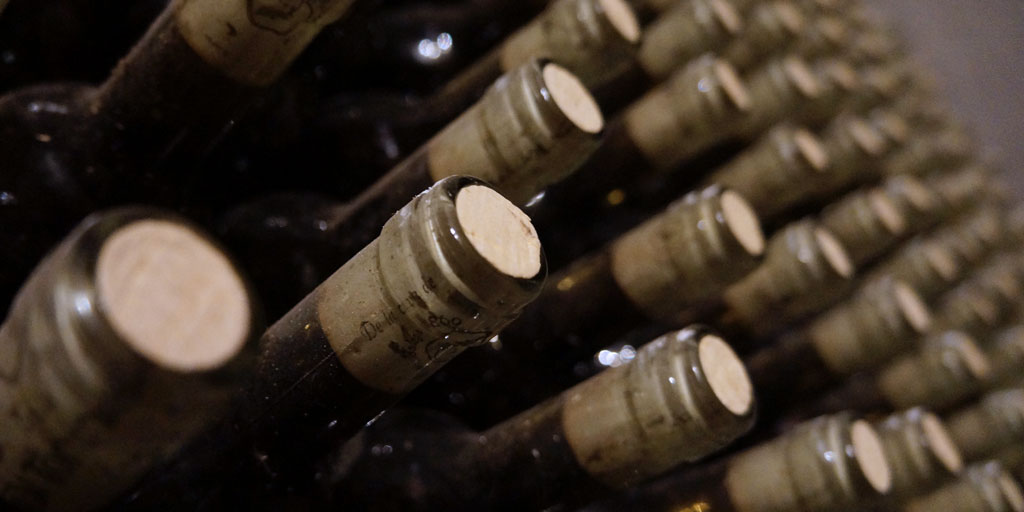
Whether you’re aging whites, reds, or rosés, it’s crucial that you store your wines correctly. While proper wine preservation can improve a wine’s flavors and aromas, improper wine storage can lead to some less-than-favorable wines. Here are some important factors to consider when storing your wine.
Short Term Storage vs Long Term Storage
Short term storage is generally from around 3-6 months and long term storage can take as long as decades. You can use short term storage for cheaper wines and long term storage for your expensive high-end wines.
Oxidation
The biggest obstacle for wine preservation is exposure to oxygen. Whether using short-term or long-term storage, it’s important to lay the bottles horizontally rather than upright. Storing the wines on their sides keeps the cork moist and prevents it from drying out — a dried up cork would allow air into the wine.
Temperature & Humidity
You ideally want to keep your wines at around 55 degrees Fahrenheit. Try to also protect the wines from cold drafts and sudden changes in temperature.
For long-term wine storage, the humidity level of the storage environment must be at around 70% or higher. A high humidity level also helps to keeps the cork moist.
Sunlight & Surroundings
Have you ever wondered why wine bottles are dark? It’s because exposure to light can negatively affect the wine inside. Too much light can actually ruin a wine’s flavors and aromas. Hence, when storing your wines, it’s important to keep them away from direct sunlight. With long-term storage, it’s also important to consider the surroundings of the wine. Try to keep the wine in a separate environment from strong-odored items such as gasoline or vinegar.
While a wine cellar is an ideal environment to store your wine, you can also use a basement as long as it meets these aforementioned requirements for proper wine storing.
When it’s finally time to open your aged wine, we also suggest finishing your bottle within a few days after opening. Like we said earlier, too much oxidation can have negative effects and wine is exposed to air once the bottle is opened. Of course, you still want to make sure that you’re drinking responsibly.
Nonetheless, with some patience and proper wine storing techniques, you can store your wine the proper way and thus enhance the wine’s flavors, textures, and aromas.
Enjoy your wine!
